Suffering from Low back pain?
Low back pain is the most common musculoskeletal issue that causes disability across all age groups. It is described as pain, stiffness, or tightness in the muscles above the gluteal muscle folds and below the rib cage, perhaps extending to the lower limbs. Many people will experience chronic pain, even if many episodes of low back pain go away on their own.
Furthermore, if the issue persists in the future, it will result in sociopsychological issues, low quality of life, and dysfunctionality.Due to its recurrence and incapacitating consequences, it is one of the most common musculoskeletal conditions in clinical settings. Even while most episodes are self-limiting, many people have chronic pain episodes that cause them to become disabled or lose their jobs.
Anatomical Considerations in Low Back Pain
The lumbar spine has a structure that provides outstanding stability but also makes it capable of movement. It consists of vertebrae, discs between the vertebrae, facet joints, ligaments, muscles, and nerves. Any dysfunction or overload affecting one or more of these components contributes to low back pain.
- Vertebral bodies bear axial loads
- Intervertebral discs act as shock absorbers
- Facet joints guide spinal motion
- Ligaments provide passive stability
- Muscles contribute to active control and posture
- Neural structures transmit sensory and motor signals
Disruption in the normal interaction among these structures leads to pain and dysfunction.
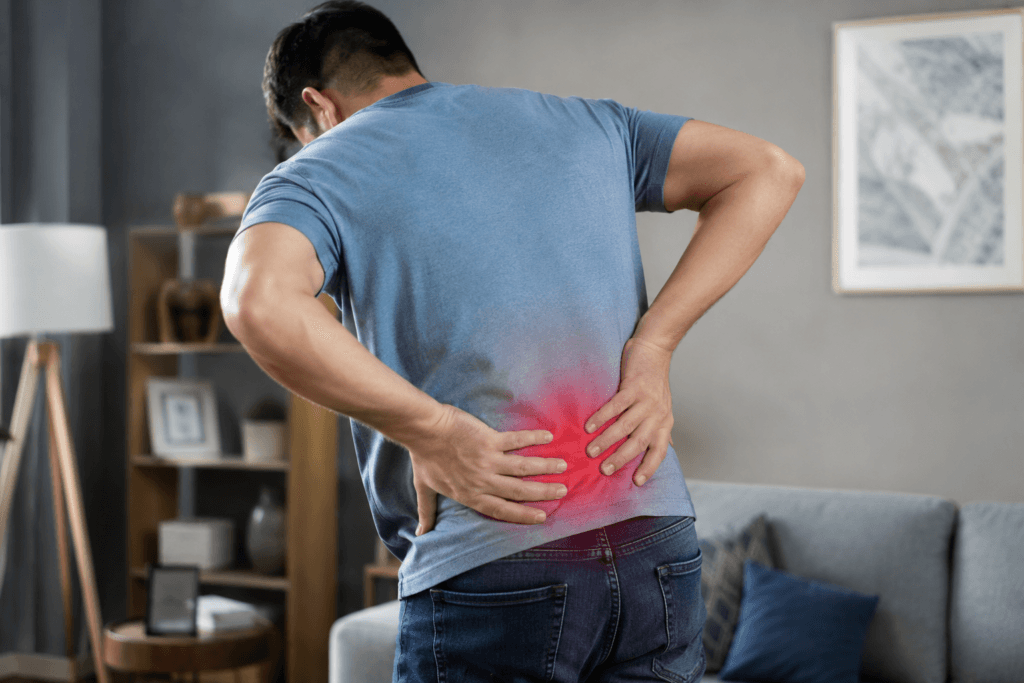
Causes of Low Back Pain
The reason for low back pain is based on a number of factors, and also comes down to the interaction between mechanical, structural, neurological, and psychological factors. Based on what you see in a patient, LBP can be classified into two types: specific and non-specific types.
1. Non-Specific Low Back Pain
This accounts for nearly 85–90% of all cases and is diagnosed when no specific pathological cause is identifiable.
- Muscle fatigue and overuse
- Poor posture and prolonged sitting
- Inadequate core muscle endurance
- Occupational stress and repetitive activities
Pain is typically mechanical in nature and varies with posture and activity.
2. Mechanical Causes
Mechanical low back pain arises due to abnormal stress or strain on spinal tissues.
a. Muscle and Ligament Injury
- Sudden or repetitive loading
- Improper lifting techniques
- Sports-related injuries
Patients often report localized pain, muscle spasm, and restricted movement.
b. Facet Joint Dysfunction
- Degenerative changes
- Poor spinal alignment
Pain is usually unilateral, aggravated by extension and rotation.
3. Degenerative Causes
Degenerative changes are progressive and commonly associated with aging.
a. Intervertebral Disc Degeneration
- Loss of disc hydration
- Reduced disc height
- Altered load transmission
This results in stiffness, aching pain, and reduced spinal mobility.
b. Osteoarthritis of Facet Joints
- Cartilage degeneration
- Joint inflammation
Pain is typically worse in the morning and after prolonged activity.
4. Disc-Related Pathology
Disc involvement may lead to both local and referred symptoms.
- Disc bulge
- Disc herniation
- Annular fissures
Patients often complain of increased pain during sitting, forward bending, coughing, or sneezing.
5. Neurological Causes
Neurological involvement occurs when nerve roots are compressed or irritated.
- Lumbar radiculopathy
- Spinal canal stenosis
- Foraminal narrowing
Symptoms include radiating pain, paresthesia, sensory loss, and muscle weakness.
6. Postural and Structural Abnormalities
Structural deviations alter spinal biomechanics.
- Scoliosis
- Excessive lumbar lordosis or kyphosis
- Leg length discrepancy
These conditions predispose individuals to chronic mechanical stress and fatigue.
7. Inflammatory Causes
Inflammatory disorders are less common but clinically significant.
- Ankylosing spondylitis
- Other spondyloarthropathies
Pain is often insidious in onset, worse at rest, and associated with morning stiffness lasting more than 30 minutes.
8. Systemic and Serious Pathologies
Though rare, serious causes must always be ruled out.
- Spinal infections
- Tumors
- Vertebral fractures
These are often associated with red flag symptoms.
9. Psychosocial Contributors
Psychological and social factors play a critical role, especially in chronic low back pain.
- Emotional stress
- Anxiety and depression
- Fear of movement
- Poor job satisfaction
These factors influence pain perception and recovery.
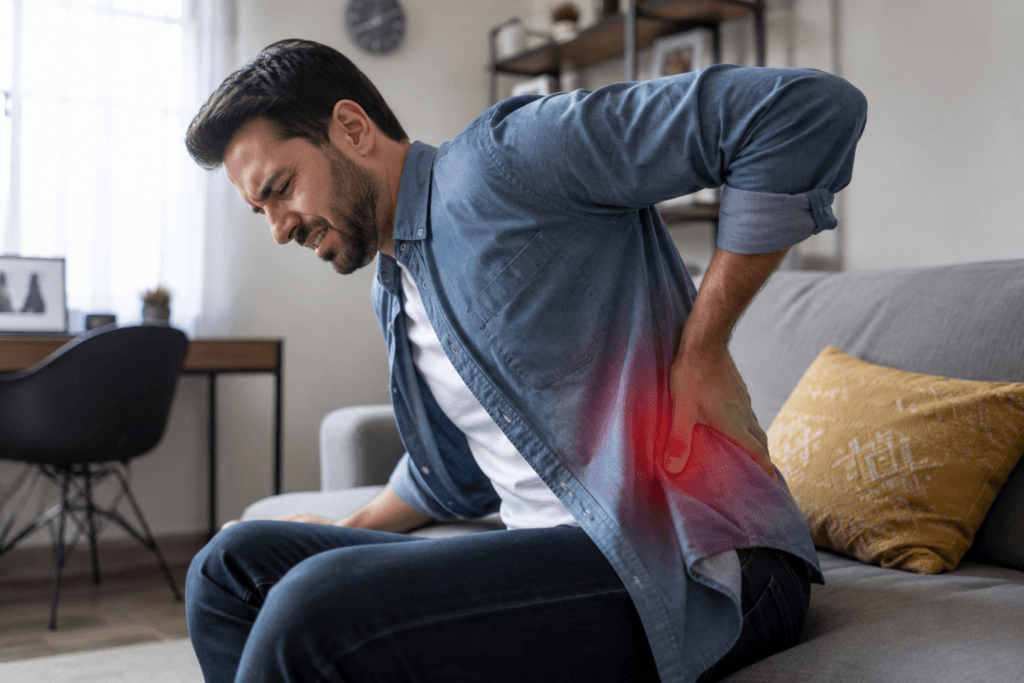
Symptoms of Low Back Pain
1. Pain Characteristics
- Dull, aching pain localized to the lumbar region
- Sharp pain with sudden movements
- Pain aggravated by activity and relieved by rest (mechanical LBP)
- Persistent pain not relieved by rest in inflammatory conditions
2. Musculoskeletal Symptoms
- Muscle tightness or spasm
- Reduced lumbar range of motion
- Pain on palpation of paraspinal muscles
- Altered movement patterns
3. Neurological Symptoms (If Present)
Radiating pain to the buttock or lower limb
- Numbness or tingling
- Muscle weakness
- Altered deep tendon reflexes
4. Postural and Functional Symptoms
- Difficulty maintaining upright posture
- Pain during prolonged sitting or standing
- Difficulty bending, lifting, or walking
- Reduced tolerance to daily activities
5. Chronic Low Back Pain Features
- Pain lasting longer than 12 weeks
- Sleep disturbances
- Reduced physical activity
- Psychological distress
10 Scientifically Proven Ways to Prevent Low Back Pain
Low back pain is one of the leading causes of disability worldwide. Research shows that many cases can be prevented by adopting healthy lifestyle habits and maintaining good spinal health. Here are 10 scientifically supported strategies to help reduce your risk of low back pain.
1. Exercise Regularly
Regular physical activity strengthens the muscles that support the spine, improves flexibility, and reduces the risk of chronic low back pain. Aim for at least 150 minutes of moderate-intensity exercise per week, including aerobic activities and strength training.
2. Strengthen Your Core Muscles
Strong abdominal, back, and pelvic muscles help stabilize the spine and distribute forces evenly during movement. Core-strengthening exercises such as planks, bird-dogs, and dead bugs have been shown to improve spinal stability and reduce back pain recurrence.
3. Maintain a Healthy Body Weight
Excess body weight increases mechanical stress on the lumbar spine. Maintaining a healthy weight through balanced nutrition and regular exercise reduces spinal loading and lowers the risk of developing low back pain.
4. Practice Proper Lifting Techniques
When lifting heavy objects, bend at the hips and knees—not the waist. Keep the object close to your body, engage your core muscles, and avoid twisting while lifting. Proper body mechanics significantly reduce the risk of muscle and ligament injuries.
5. Avoid Prolonged Sitting
Extended sitting increases pressure on the intervertebral discs and can contribute to muscle stiffness. Stand, stretch, or walk for a few minutes every 30–60 minutes to improve circulation and reduce spinal stress.
6. Improve Workplace Ergonomics
An ergonomic workstation supports good posture and minimizes unnecessary strain. Adjust your chair so your feet rest flat on the floor, keep your knees at approximately 90 degrees, and position your monitor at eye level.
7. Stay Flexible with Regular Stretching
Stretching the hamstrings, hip flexors, gluteal muscles, and lower back improves mobility and decreases muscle tightness that can contribute to low back pain. Incorporate gentle stretching into your daily routine.
8. Get Quality Sleep on a Supportive Mattress
Poor sleep quality and inadequate spinal support can worsen back discomfort. A medium-firm mattress is generally associated with improved comfort and reduced back pain for many individuals. Sleeping on your side with a pillow between your knees may also help maintain spinal alignment.
9. Quit Smoking
Smoking reduces blood flow to spinal discs, accelerates disc degeneration, and delays tissue healing. Research consistently shows that smokers are more likely to develop chronic low back pain than non-smokers.
10. Manage Stress and Mental Health
Psychological stress increases muscle tension and is associated with a higher risk of persistent low back pain. Mindfulness, relaxation techniques, regular physical activity, and adequate sleep can help reduce stress-related muscle tension and improve overall well-being.
World Health Organization (WHO) – Low Back Pain
ALSO READ ABOUT THIS – Zone 2 Cardio training: Reasons to do it


0 Comments